
Florida Drought 2026-2027: Water Restrictions, Regional Rules and the Growing Debate Over Who Has to Conserve
Published Oct. 5, 2026 · Restrictions verified Oct. 4, 2026
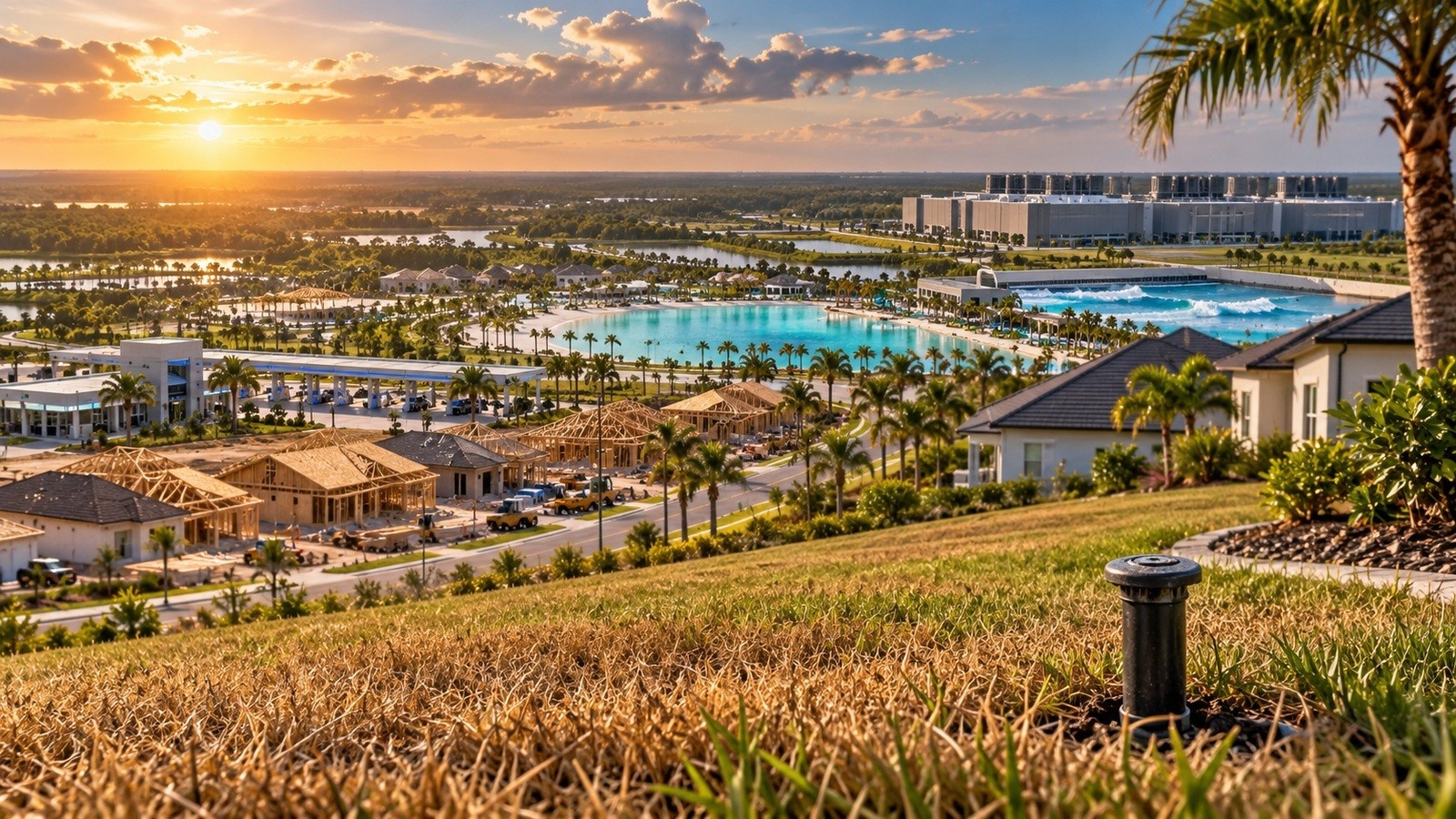
FHV editorial illustration (AI-generated). It represents competing perceptions of Florida growth and water demand and is not a photograph of one real location.
One major water-shortage order now runs through March 31, 2027. But Florida's rules vary by region, and rapid growth is fueling a bigger debate about fairness.
Florida's rainy season is winding down, but the state's water shortage story is far from over. In large parts of Florida, residents are still being told to limit landscape irrigation to one day a week, even after summer storms and afternoon downpours.
That disconnect is creating two questions at once: Why can Florida still be in drought after months of summer rain? And why are homeowners being asked to conserve while new development — including car washes, resort-style lagoons, surf parks and data centers — continues to move forward?
The first question has a hydrologic answer. The second is more complicated, and it is becoming an increasingly important public conversation about growth, water sources, permits, reclaimed water and whether conservation burdens are being shared transparently.
Here is what is actually in effect across Florida, verified through October 4, 2026, what the data says about the drought, and what residents should know before assuming that every visible use of water is drawing from the same supply.
- Southwest Florida: Modified Phase III "Extreme" Water Shortage and one-day-per-week landscape irrigation through March 31, 2027.
- Suwannee River region: Modified Phase II and one-day-per-week irrigation for established lawns through December 31, 2026.
- St. Johns River region: Phase III Extreme Water Shortage in affected areas, with one-day-per-week irrigation and no fixed end date currently stated.
- Northwest Florida: districtwide Water Shortage Warning calling for voluntary conservation until rescinded.
- South Florida: broader 2026 warnings were rescinded after conditions improved, but a Modified Phase II order remains for certain private-well users in northeastern Cape Coral.
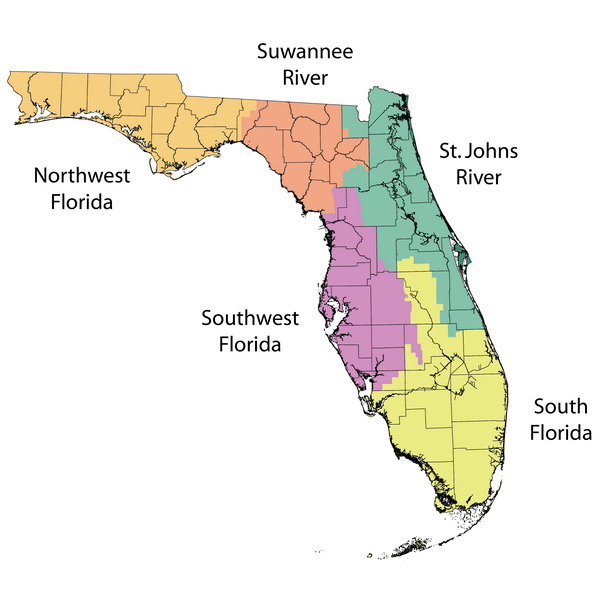
Official Florida Water Management Districts map. Source: Florida Department of Environmental Protection. Used for geographic orientation; current drought and water-shortage orders may apply only to portions of a district.
Florida Does Not Have One Statewide Drought Restriction
Florida's water is managed regionally by five water management districts. Each district can respond differently to drought, and cities, counties and utilities can impose stricter local rules. That is why two homeowners in neighboring counties — or even in different parts of the same county — can have different watering schedules.
The U.S. Drought Monitor map released October 1, using data valid September 29, 2026, still showed a mix of abnormal dryness and drought across Florida, including pockets of severe and extreme drought. Drought.gov reports 11.3 million Florida residents currently live in areas of drought. Recent rain improved conditions around Miami, but drought persisted elsewhere.
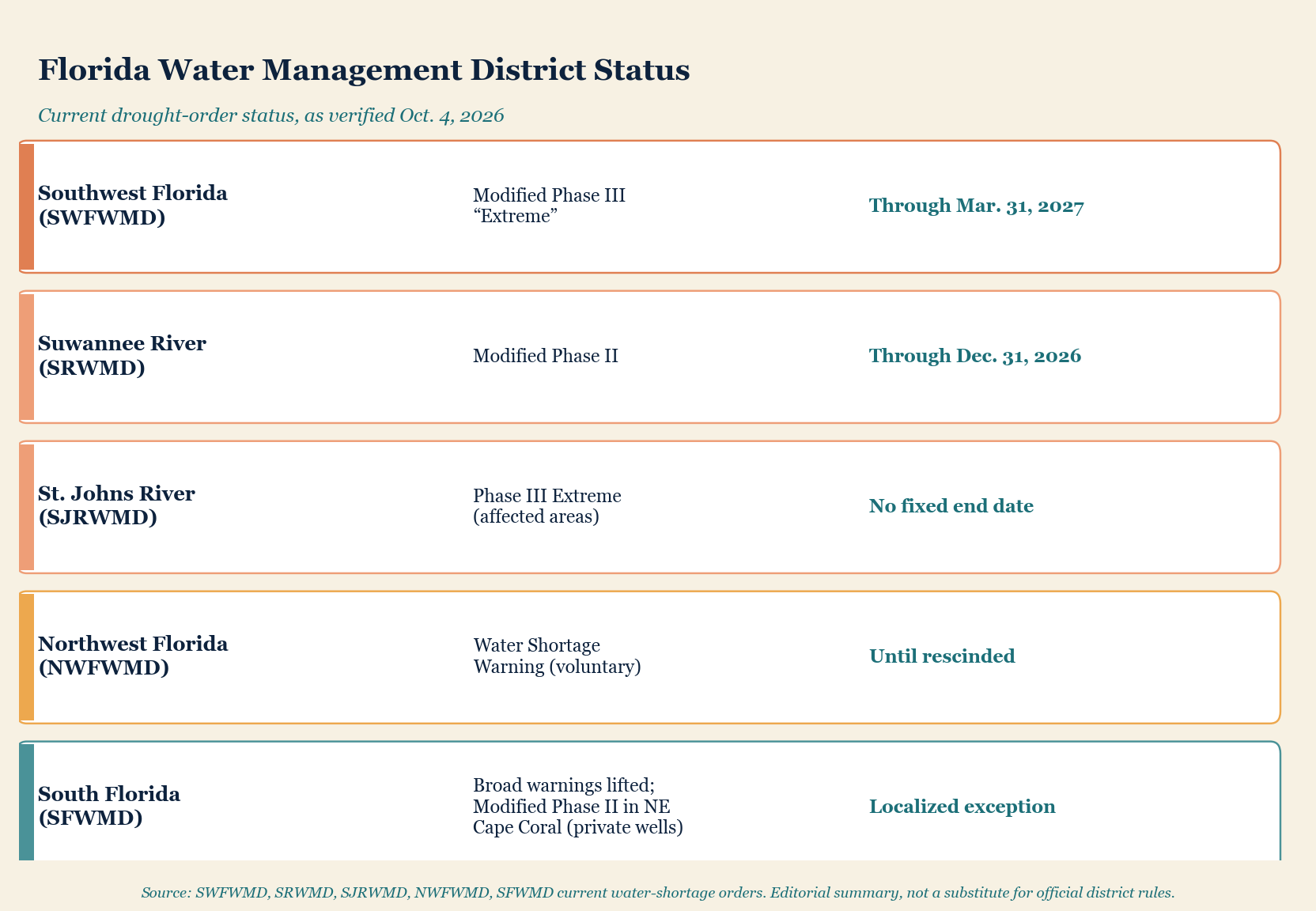
Current regional status as verified Oct. 4, 2026. Local and year-round rules can still apply outside these temporary shortage orders.
It Rained Yesterday. So Why Are We Still in a Drought?
Because drought recovery is not measured by whether it rained yesterday — or even whether one month was wet. Water managers track longer-term rainfall deficits, groundwater levels, river and spring flows, lake levels and public-supply conditions.
The St. Johns River Water Management District explains that rain first has to move through the hydrologic system. Some is absorbed by dry soil, some is used by vegetation and some is lost to evaporation. Only part of a storm actually makes it into groundwater. After a long dry period, recovery can require substantially more rain than the measured deficit itself.
As of August 31, the district reported 12-month rainfall deficits of 15.45 inches in Duval County, 15.46 inches in Clay, 17.34 inches in Bradford and 19.65 inches in Baker. District hydrologists estimated that roughly three feet of rainfall might be needed across portions of the affected area over the following three months to fully restore groundwater and surface-water conditions.
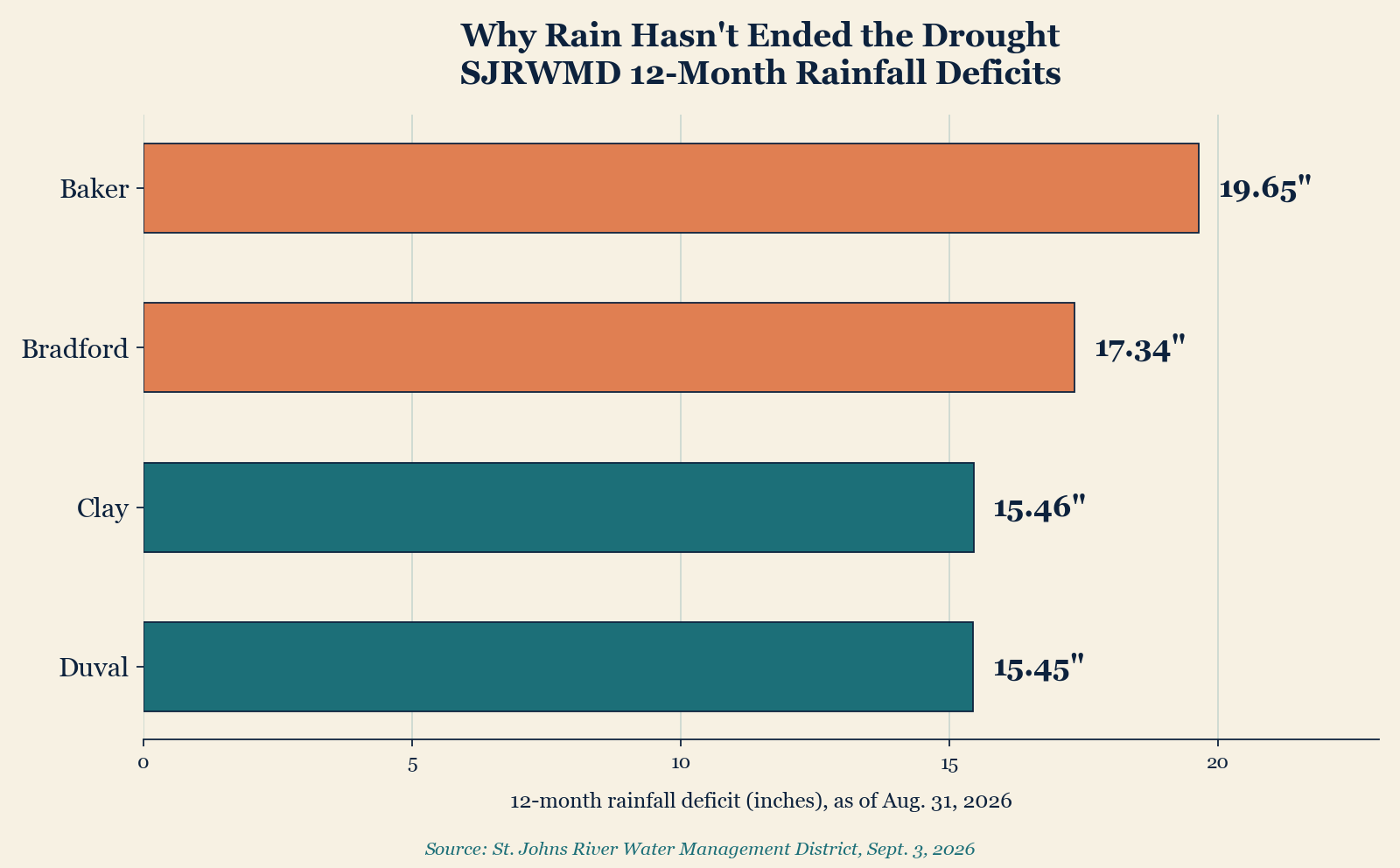
These are county rainfall deficits, not a forecast of how much each county will receive. Source: SJRWMD, Sept. 3, 2026.
West-central Florida has a similar long-term problem. The Southwest Florida Water Management District reported a 15.4-inch regional rainfall deficit for the 12 months through August 2026. As of September 20, Tampa Bay Water's C.W. Bill Young Regional Reservoir held 7.87 billion gallons — about half of its storage capacity.
What the Current Restrictions Look Like Around Florida
Southwest Florida: Phase III Through March 31, 2027
The Southwest Florida Water Management District extended its Modified Phase III "Extreme" Water Shortage through March 31, 2027. The order covers all of Citrus, DeSoto, Hardee, Hernando, Hillsborough, Manatee, Pasco, Pinellas, Polk, Sarasota and Sumter counties; portions of Charlotte, Highlands and Lake counties; and specified additional communities.
Landscape irrigation is generally limited to one day per week with strict overnight/evening watering windows, unless a local government already has stricter rules. The order applies to residents using private wells as well as public water supplies.
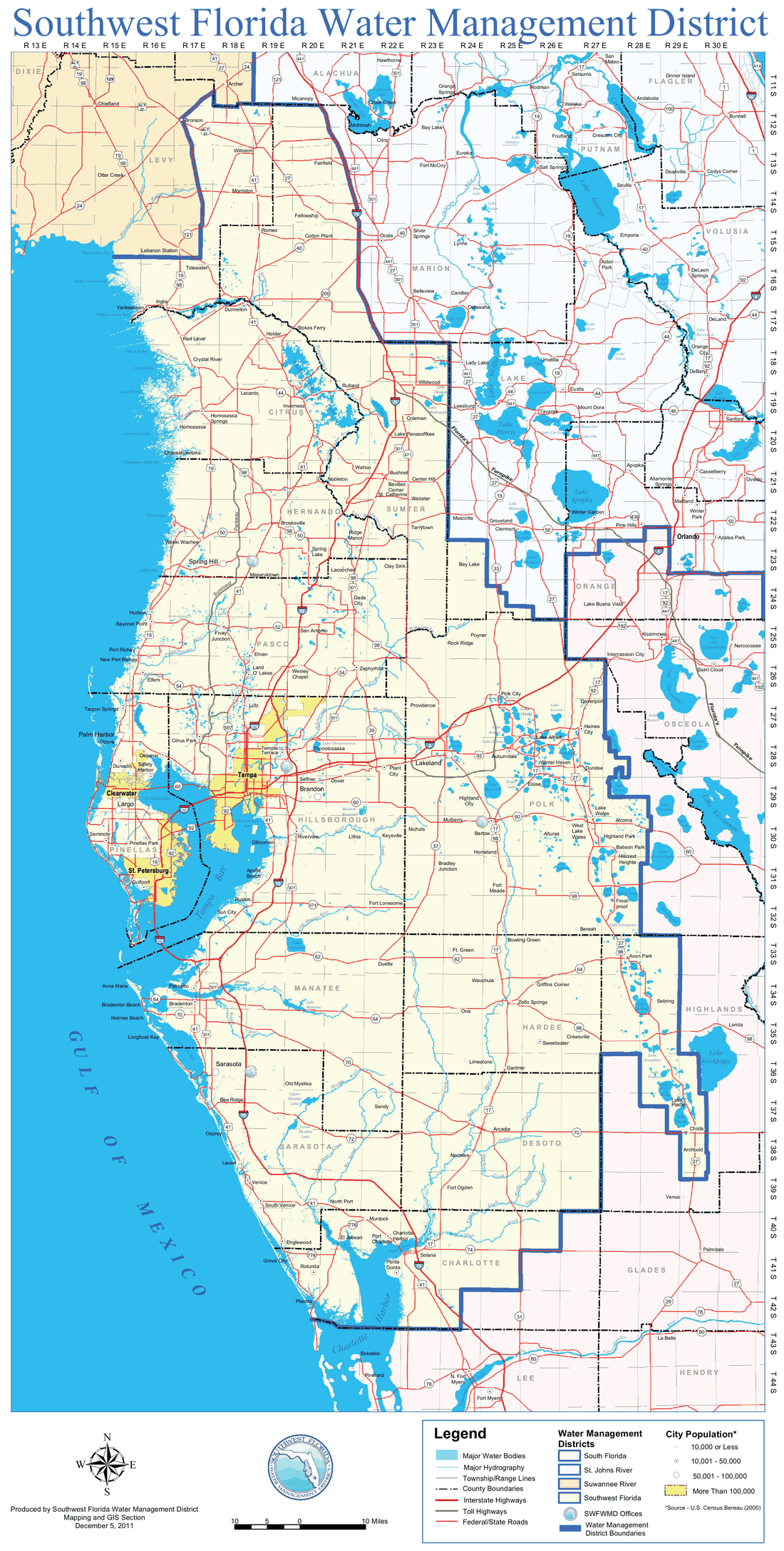
Southwest Florida Water Management District geography shown for orientation. Modified Phase III "Extreme" Water Shortage restrictions remain in effect through March 31, 2027, in the counties and additional areas identified by SWFWMD. Sources: Southwest Florida Water Management District district map and Sept. 22, 2026 Phase III extension.
Suwannee River Region: Phase II Through Dec. 31, 2026
The Suwannee River Water Management District extended its Modified Phase II order through December 31, 2026. Established lawns are generally limited to one irrigation day per week: Saturday for odd-numbered or no-address properties, Sunday for even-numbered addresses and Tuesday for nonresidential properties. Irrigation is prohibited from 10 a.m. to 4 p.m. The order also includes agricultural and golf-course measures, while certain low-volume methods and reclaimed water are treated differently.
St. Johns River Region: Phase III in Affected Areas
A Phase III Extreme Water Shortage remains in effect in affected portions of the St. Johns River Water Management District. Landscape irrigation is limited to one day per week and cannot occur between 8 a.m. and 6 p.m. The declaration also suspends certain non-essential commercial, industrial and institutional water uses, restricts golf-course irrigation and prohibits aesthetic water uses such as decorative fountains in the shortage area.
Northwest Florida: Voluntary Warning Remains in Place
The Northwest Florida Water Management District's districtwide Water Shortage Warning calls for voluntary reductions and encourages irrigation during lower-evaporation hours. It is not the same as the mandatory one-day schedule in the more restrictive districts. The warning remains in place until rescinded, and local mandatory utility rules can still apply.
South Florida: Broader Warnings Lifted, Cape Coral Exception Remains
South Florida improved enough during 2026 for the district to rescind broader warnings affecting Miami-Dade and Monroe, Glades and parts of Highlands, and later Lee and Collier counties. A Modified Phase II shortage remains in a designated area of northeastern Cape Coral for residents and businesses using private wells that tap the Mid-Hawthorn Aquifer for irrigation.
The Bigger Debate: Who Is Being Asked to Conserve?
For many Floridians, the most emotional part of the drought is not the science. It is the optics. A homeowner may be limited to one lawn-watering day while driving past a new car wash, a giant blue lagoon, another master-planned community or a proposed water-heavy attraction.
That frustration is understandable. But the comparisons are not always apples-to-apples. A visible water feature may use reclaimed water rather than drinking water. A commercial facility may recycle a large share of what it uses. A lagoon's headline number may describe a one-time initial fill rather than annual consumption. And a project that has been approved may not be operating yet.
The fair question is not "why can they use water?" A more useful question is: what source are they using, how much fresh water are they permitted to withdraw, how much is recycled or reclaimed, what happens during a drought, and is that information easy for the public to find?
Car Washes: Visible, Controversial — But Often More Water-Efficient Than Washing at Home
Car washes have become an easy symbol of the debate because they are highly visible in fast-growing corridors. In the current Southwest Florida Phase III order, washing a vehicle at home is limited to the property's lawn-watering day and requires a shutoff nozzle. The district's own FAQ suggests considering a commercial car wash that recycles water.
EPA WaterSense guidance cites a 2018 industry study in which conveyor car washes averaged about 30 gallons of fresh water per vehicle, with significant amounts of reclaimed water also used. Actual use varies by facility and equipment. In other words, a new car wash can still be a legitimate subject for local water-supply questions, but its water footprint cannot be inferred just by looking at the building.
Lagoon Communities: Huge Volumes, But the Headline Number Needs Context
Pasco County already has two examples that explain why this issue resonates. The Epperson Lagoon has a water volume of roughly 14.5 million gallons. Metro Development Group said before construction that its initial 14 to 15 million gallons would be purchased from Pasco County and that its operating technology was designed to use far less water than a similarly sized park or golf course.
The 15-acre Mirada Lagoon opened in 2023 with roughly 33 million gallons of water. Those figures are real and attention-grabbing — but they describe the water held in the lagoons, not a verified annual freshwater-consumption rate. Both facilities also predate the current 2026 drought order. The relevant drought-era questions are the ongoing makeup-water source, evaporation replacement, recycling, permits and any curtailment requirements.
Peak Surf Park: Water Concerns Are Real, But the Project Is Not Using That Water Yet
The proposed Peak Surf Park inside the Two Rivers development in eastern Pasco became a flashpoint during 2026 public hearings. Residents repeatedly raised water-use concerns while the region was under extreme drought restrictions. Pasco commissioners later approved the land-use and zoning changes that include the project.
The applicant told planners that the actual surf lagoon would be about six acres and require roughly 8 million gallons for its initial fill over two to three weeks. That is a developer estimate presented during the approval process. The park is not open and is not yet a current source of that water demand; additional planning, permitting and construction remain. That distinction matters.
Data Centers: Florida Added New Water-Permitting Rules in 2026
Data centers are another area where broad comparisons can be misleading. Some cooling systems can consume significant water; other designs use much less on-site water. Florida law now defines a "large-scale data center" as a single location with an anticipated monthly peak electrical load of at least 50 megawatts.
For water-permit applications requesting an average allocation of at least 100,000 gallons per day, applicants must disclose water sources, amounts and losses for cooling and other uses and submit a water-conservation plan. The law also requires reclaimed water in place of some or all surface water or groundwater when the statutory availability and feasibility conditions are met.
Florida already reuses a large amount of treated wastewater. DEP reports that about 958 million gallons per day of reclaimed water were beneficially reused in 2024. Reclaimed water can be used for irrigation, aesthetic water features and other non-potable purposes, which is why the source of water matters as much as the size of a visible feature.
So Is the System Fair?
There is no single statewide answer. Florida's water system separates users by source, permit, district, utility and type of use. During severe shortages, the rules do not apply only to homeowners: districts can restrict commercial and industrial non-essential uses, agriculture, golf courses, fountains, pressure washing and other categories too. Large permitted users may also have permit-specific conservation and shortage conditions.
At the same time, the public has a reasonable interest in transparency. When residents are cited for watering on the wrong day, they are likely to expect clear answers about how much water major new projects are allowed to use, where that water comes from and what happens to those allocations during drought.
That is where the conversation can move beyond anger and toward information that is actually comparable.
Six Questions to Ask About Any Water-Intensive Development
- What is the water source — potable, groundwater, surface water or reclaimed?
- What are the permitted average and peak withdrawals?
- How much water is recycled or recirculated?
- What portion is lost to evaporation or discharge?
- What drought-curtailment requirements apply?
- Are the permits, conservation plan and monitoring data public?
What Homeowners Need to Know Right Now
Do the restrictions apply if I have a private well?
They can. The Southwest Florida Phase III order specifically includes private wells. The St. Johns Phase III restrictions also apply to private wells and pumps in the affected area. Other districts and local rules differ, so check the rule for your address and water source.
Is reclaimed water automatically exempt?
No statewide answer fits every system. Reclaimed water is often treated differently because it reduces demand on potable or groundwater supplies, but utilities can still impose schedules to manage reclaimed-water pressure, storage and conservation. Check your utility's rule rather than assuming an exemption.
Can my HOA force me to keep a perfect green lawn?
Under the current Southwest Florida Phase III order, an HOA or other entity may not enforce deed restrictions or community standards that require increased use of surface water, potable water or domestic well water, including replacing plants just to meet aesthetic standards or pressure washing for appearance. That is a regional rule, not a statement about every HOA in Florida.
Can I wash my car?
In the Southwest Florida Phase III area, non-commercial car washing at home is limited to the lawn-watering day and requires a hose with a shutoff nozzle. Other regions can have different rules. Commercial car washes operate under separate requirements and may use recycling systems.
What about new sod and landscaping?
Most orders provide some establishment period for new landscaping, but the schedules change by district and can be tighter during drought. Do not assume a normal year-round new-sod exception still applies during a water shortage.
Can I be fined?
Yes, depending on the local government or utility. Enforcement methods and fine amounts are not uniform statewide. Some areas issue citations without a warning under current Phase III requirements. Check your local utility before relying on a statewide summary.
How to Find the Exact Watering Rule for Your Address
- Identify your water management district. County lines do not always match district boundaries.
- Check your city, county or utility next. Local rules may be stricter than the district baseline.
- Confirm your water source: public potable water, private well, reclaimed water or another permitted source.
- If you are in a split county, use your address rather than relying on a countywide social-media graphic.
- When in doubt, call the utility or water management district before irrigating.
Florida Home Vibes will continue tracking major drought-order changes and water-related development issues as conditions change. If your community has changed its watering rules — or if you are seeing unusually low ponds, lakes or wells where you live — tell us what you are seeing.
Do you think Florida is asking residents, businesses and new development to conserve water fairly — or does the system need more transparency? Keep the discussion specific: tell us your county, water source and what you are seeing locally.
Important: Water-shortage orders and local watering schedules can change. This article is a statewide informational overview, not a substitute for the current rule published by your water management district, city, county or utility.
Sources & Further Reading
Water Management Districts
- Southwest Florida Water Management District — Sept. 22, 2026 Phase III extension
- Southwest Florida Water Management District — current District Water Restrictions
- St. Johns River Water Management District — current watering restrictions / Phase III
- St. Johns River Water Management District — Sept. 3, 2026 rainfall deficit update
- Suwannee River Water Management District — July 15, 2026 Phase II extension
- Northwest Florida Water Management District — Water Shortage Warning
- South Florida Water Management District — current water shortage information
- South Florida Water Management District — water conservation and 2026 rescissions
State & Federal Data and Law
- U.S. Drought Monitor — current map and Sept. 29, 2026 data
- Drought.gov — Florida drought statistics and current map
- Florida DEP — Water Management Districts
- Florida DEP — Florida's Reuse Activities (2024 data)
- U.S. EPA WaterSense at Work — Vehicle Washes
- Florida Statutes §373.262 — Large-scale data center permitting
Development & Supporting Sources
- Metro Development Group — Epperson Lagoon initial water volume/source
- PCL — Epperson Lagoon water volume
- Tampa Bay Beacons — July 2026 Pasco surf-park water-use hearing
- Tampa Bay Beacons — Sept. 2026 Two Rivers / surf park approval
- Florida Home Vibes — Two Rivers Expansion and Peak Surf Park Move Forward in Pasco County
Want more local Florida growth and water updates like this? Join the list — we'll let you know when we go live.
Visit Florida Home Vibes