
Tampa Bay's Rip Currents: What 35 Rescues in 3 Weeks Taught Lifeguards
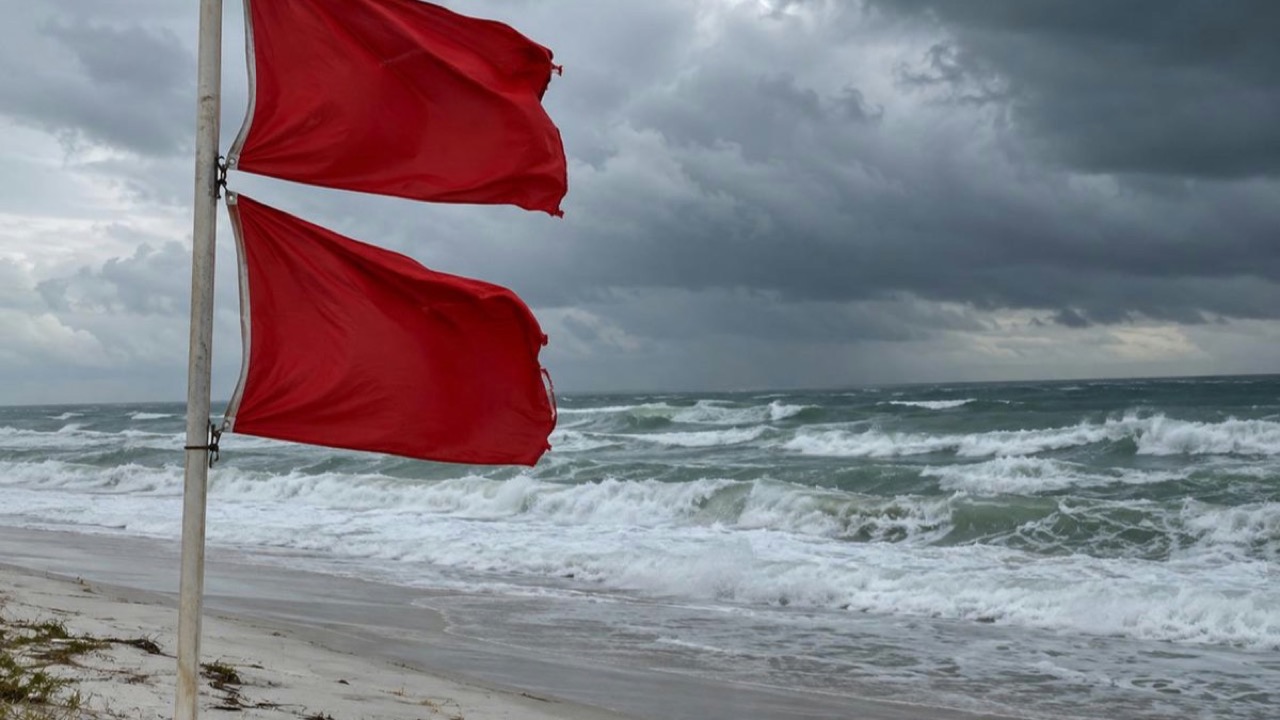
Florida's statewide beach warning flag system — the same color code posted at Clearwater Beach, St. Pete Beach, and every other Tampa Bay Gulf beach. Photo: Michael Rivera (CC BY-SA 4.0), via Wikimedia Commons.
Forget sharks and red tide for a minute — the single deadliest hazard at a Tampa Bay beach is usually invisible until you're already caught in it. Rip currents are Florida's leading weather-related killer, and this year gave Pinellas and Manatee County lifeguards a real-time demonstration of just how fast conditions can flip from calm to dangerous.
What Happened at Clearwater Beach
In June 2026, lifeguards at Clearwater Beach pulled 35 swimmers from the water over three weeks, with a single Monday accounting for 12 rescues — the highest daily count of the stretch. Patrick Brafford, beach lifeguard manager for Clearwater Fire Rescue, explained the mechanics: onshore winds combined with a king tide that peaked that Sunday pushed water levels nearly three feet above normal. As the tide receded, it carved out a fast-moving current roughly 80 feet from shore that pulled swimmers seaward faster than most could react. "That's when we started having a majority of rescues back to back to back," Brafford said.
Manatee County Saw It Even Worse
Just south of Pinellas, Manatee County lifeguards had an even more intense stretch — 136 rescues over just three days during the same weather pattern. The National Weather Service issued rip current alerts for the region on June 18-19 and again during a new moon that weekend, when tidal swings tend to be strongest.
The Save: Having Lifeguards On Duty
Despite the volume of rescues, no one drowned during the Clearwater incident — lifeguards shut down high-risk stretches of shoreline near Pier 60 as conditions worsened. Brafford didn't mince words about why that mattered: "If it was after hours, it would have been a real mess out here. That's a perfect example of the absolute necessity to have lifeguards on these beaches." It's a pointed reminder that the guarded sections of Tampa Bay's beaches exist for exactly this reason — and that swimming outside posted hours or unguarded stretches removes your safety net entirely.
How to Actually Read the Flags
Florida's beaches use a standardized color-coded flag system, and most locals only half-remember it: purple means dangerous marine life, green is low hazard, yellow means medium hazard with moderate surf or currents, single red means high hazard with strong currents, and double red means the water is closed to the public entirely. The catch — absence of a flag doesn't mean safe conditions, it usually means no one has checked recently. If in doubt, ask a lifeguard before wading in.
The Bigger Statewide Picture
Nationally, the National Weather Service had logged 57 preliminary surf zone fatalities across the US through September 17, 2026, with Florida accounting for 9 of them — spread across Ormond Beach, Juno Beach, Pompano Beach, Cocoa Beach, Daytona Beach, and Panama City Beach. Most victims nationally are males between 10 and 29 years old, and incidents cluster heavily in June and July — exactly the window when Tampa Bay saw its rescue surge.
If You're Headed to the Beach
Swim near a lifeguard whenever possible, check the flag color before you get in the water, and know the one rule that actually saves lives if you're caught in a rip current: don't fight it by swimming straight back to shore. Swim parallel to the beach until you're out of the current, then angle back in. Panicking and swimming against it is what exhausts people before help can reach them.
Sources & Further Reading
- Tampa Bay Times — Clearwater Beach lifeguards rescue 35 people from rip currents
- National Weather Service — 2026 Surf Zone Fatality Statistics
- Hillsborough County — Beach & Water Safety Resources
Want more local Tampa Bay updates like this? Join the list — we'll let you know when we go live.
Visit Florida Home Vibes